
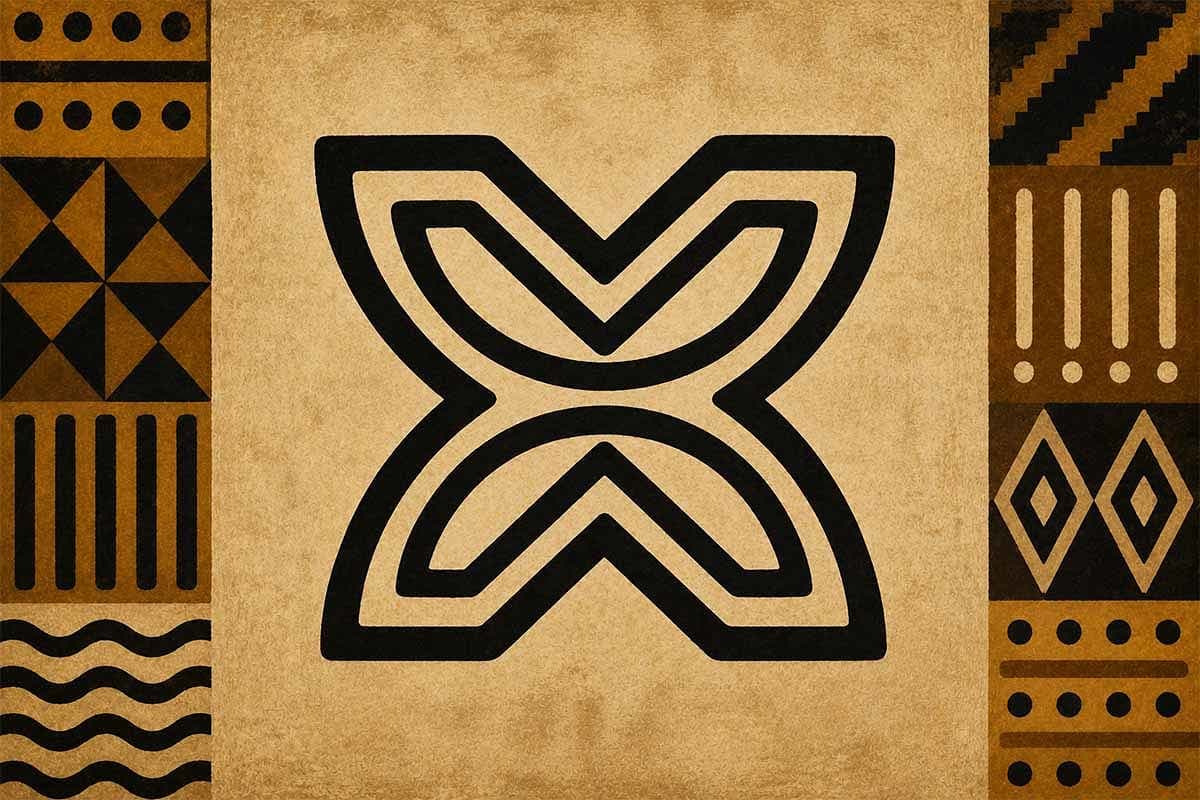
Meaning, memory and identity
Fawohodie, meaning "Independence" or "Freedom", is the Adinkra symbol of liberation, emancipation and self-determination. Derived from the proverb "Fawohodi ne na ohia biribiara" (Independence is what one needs for anything), it celebrates the right of individuals and peoples to determine their own destiny.
Fawohodie: Independence / Freedom
Symbol Description
Fawohodie features a stylised bird-like form with spread wings, evoking the freedom and openness of flight. The design is graceful and dynamic, suggesting movement, aspiration and the breaking of bonds.
Meaning
"Fawohodie" derives from "fa wo hodie", meaning "receive your freedom" or "take your independence." The symbol represents:
- Freedom: Both personal liberty and collective independence. It is a celebration of the right to be oneself, to live according to one's own values and choices.
- Emancipation: Liberation from bondage, whether physical (slavery, colonialism), psychological (fear, oppression of the spirit) or social (discrimination, exclusion).
- Self-determination: The right of individuals and peoples to decide their own futures without external coercion.
The Proverb
Fawohodie is associated with the proverb: "Fawohodi ne na ohia biribiara", "Independence is what is needed for everything." This proverb asserts that without freedom, nothing else of value is truly possible, not happiness, not prosperity, not fulfilment.
Historical Resonance
When Kwame Nkrumah and the independence movement sought symbols that could unite Ghanaians in the struggle for self-rule, they drew on the deep well of Akan philosophy. Fawohodie encapsulated what they were fighting for. The concept it represents, that freedom is the precondition for all human flourishing, was a powerful rallying cry.
Ghana's independence in 1957 made Fawohodie not just a cultural symbol but a political and historical one. It represented the fulfilment of generations of struggle and the beginning of a new chapter.
Individual and Collective Freedom
In Akan thought, freedom has both individual and communal dimensions. Personal liberty cannot exist in a vacuum, it is embedded in a community of relationships and responsibilities. True freedom is not license to do anything; it is the capacity to choose rightly, to develop one's potential and to contribute to the community.
Fawohodie in Contemporary Use
The symbol is popular in:
- Kente cloth and Adinkra fabric design, especially for celebratory occasions
- Jewellery, particularly commemorating personal milestones, graduation, coming of age, release from difficulty
- Political and civic contexts, associated with democracy, human rights and justice
- The Ghanaian diaspora, as a reminder of heritage and resilience
The symbol in context
Photos, recordings and films from the collection
Photographs
4Prepared by Me Man Ghana Editorial Team
Learn at your level
Work through Beginner, Intermediate and Scholar questions without repeating the same prompt.
Community classroom
Join the conversation
Share a reflection, ask a question, or add what you know.
Sign in to save progress and join the discussion.
No reflections yet. Start the conversation.
Reflections
0