
Meaning, memory and identity
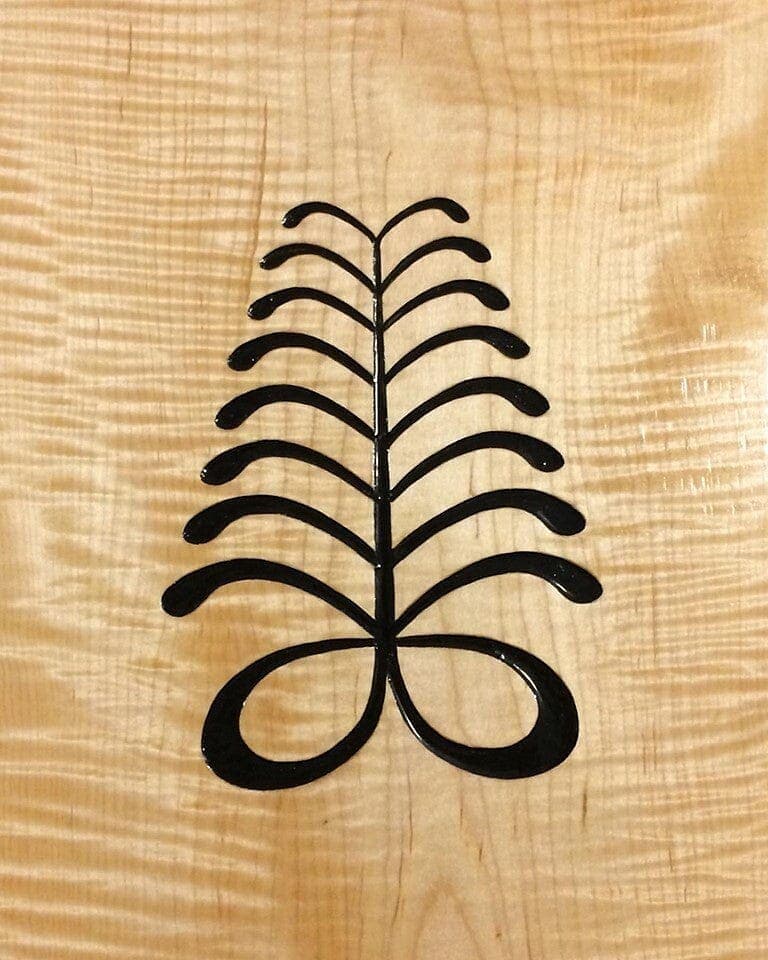
Aya, meaning "fern", is the Adinkra symbol of endurance, resourcefulness and independence. The fern survives in harsh conditions and difficult terrain, making it a powerful metaphor for the resilient, resourceful individual who thrives against the odds.
Aya: The Fern
Symbol Description
Aya depicts a fern plant in stylised form, its fronds curling outward symmetrically, evoking growth, resilience and the ability to flourish in difficult conditions. The fern's structure, with its many interlocking parts, also suggests complexity and richness beneath a surface of apparent simplicity.
Meaning
"Aya" is the Akan word for "fern." The symbol represents:
- Endurance: Ferns grow in the most challenging environments, on rocky outcrops, in dense forest understories, in soil that other plants cannot survive in. To be like a fern is to endure conditions that defeat others.
- Resourcefulness: The fern does not wait for ideal conditions. It makes use of what is available, minimal light, poor soil, scarce water, and thrives. This speaks to the quality of making the best of one's circumstances.
- Independence: The fern does not climb other plants or depend on other species for support (unlike vines). It stands on its own roots. This independence is a virtue in Akan thought.
- Defiance: There is also a quality of defiance in Aya, the fern's ability to grow where nothing else grows is a kind of quiet refusal to be defeated. This is celebrated in Akan culture as a mark of character.
The Proverb
Aya is associated with the proverb: "Aya ye dua a eda soro", "The fern is a tree that falls but rises again." This speaks directly to resilience: the capacity to recover from setbacks, not just once but repeatedly.
Another associated saying: "One who has survived much is not easily frightened", a person who has endured hardship develops a kind of fearlessness born of experience.
Ferns in Akan Environment
Ghana's forest ecology is rich with ferns. They are found in the forest undergrowth of the Ashanti, Brong-Ahafo and Western regions. The Akan people, living among forests, would have been keenly aware of the fern's particular qualities, its ability to survive drought by curling inward (resurrection ferns), its colonisation of inhospitable surfaces, and its longevity.
Social and Cultural Significance
The fern as a model for human behaviour speaks to values highly prized in Akan society:
- The self-made person who rises without patronage
- The widow or orphan who builds a life against the odds
- The community that rebuilds after disaster
Aya affirms that these individuals and communities are not less worthy but more, their endurance is itself a form of greatness.
Aya in Contemporary Life
The symbol is used:
- By organisations that support refugees, survivors of adversity, or marginalised communities
- In self-development and motivational contexts
- As a personal symbol by individuals who have overcome significant challenges
- In tattoo art, frequently chosen by people marking a period of recovery or transformation
- In women's organisations and feminist contexts, celebrating female endurance and resilience
The symbol in context
Photos, recordings and films from the collection
Photographs
3Prepared by Me Man Ghana Editorial Team
Learn at your level
Work through Beginner, Intermediate and Scholar questions without repeating the same prompt.
Community classroom
Join the conversation
Share a reflection, ask a question, or add what you know.
Sign in to save progress and join the discussion.
No reflections yet. Start the conversation.
Reflections
0