
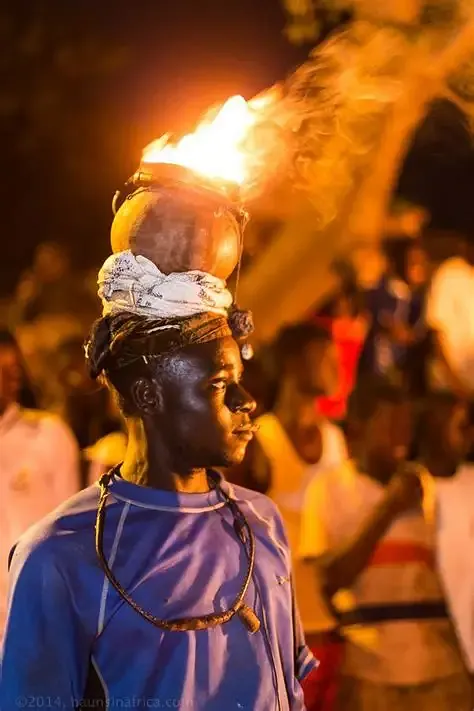
Enter the celebration
Bugum, often called the Fire Festival, turns the streets of northern towns into moving lines of flame. Families light bundles of dry grass, and torchbearers process through the night with drums, songs and calls.
In a well-known Dagbon account, the torches remember the search for a missing prince who was found asleep beneath a tree. The tree was blamed for hiding him and set alight. Other communities tell the story differently, but fire, searching and collective memory remain at the centre.
The festival is thrilling to witness and demands care. Torches throw sparks, crowds move quickly and the route can be dark. Visitors should keep behind local participants, wear sensible clothing and treat the procession as a community observance rather than a spectacle to enter.
Making and carrying the torch
Festival torches are commonly made from bundles of dry grass that burn brightly as participants move. Their light transforms familiar streets and creates a strong sense of collective motion. Drums and songs travel with the procession, while families watch and join from different points along the route.
Experiencing Bugum safely
The same fire that makes Bugum memorable also makes crowd awareness essential. Sparks can travel, visibility changes quickly and excited groups may reverse direction. Visitors should avoid synthetic or loose clothing, protect cameras without blocking their view, and follow residents who understand the route. Watching from the edge is still participation: it gives torchbearers space and lets the larger river of light come into view.
Reflections
0