
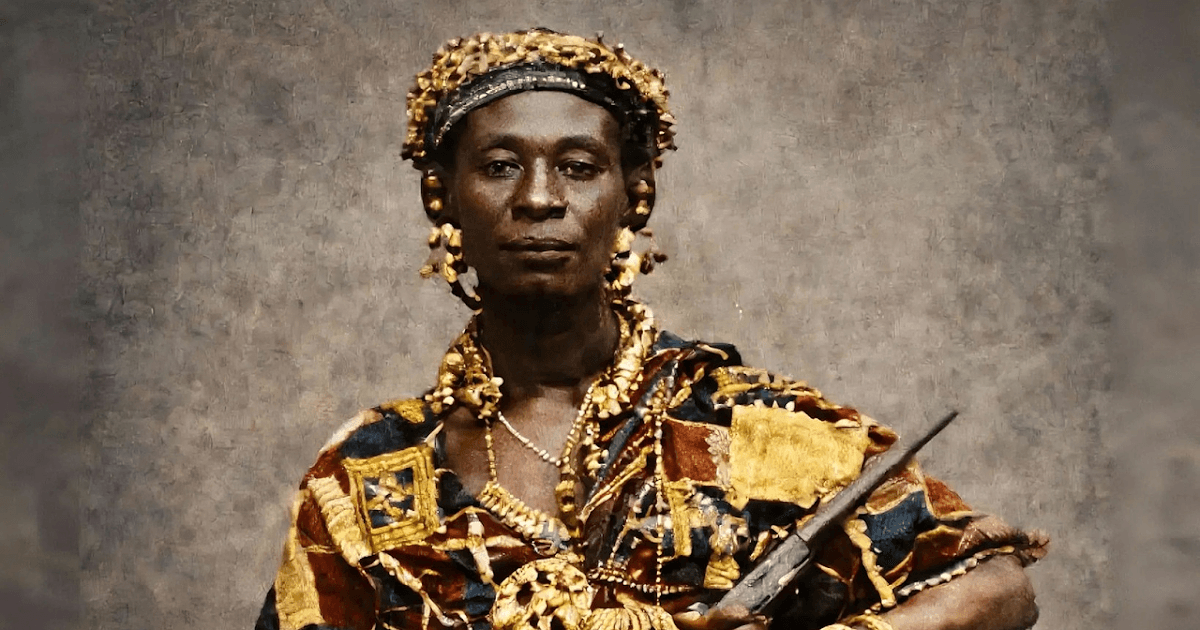
By 1900, Britain had occupied Kumasi and exiled Asantehene Prempeh I and other leaders. During a visit that March, Governor Frederick Hodgson demanded that the Golden Stool be produced for him. Because the stool embodies Asante nationhood and is not an ordinary seat, the demand was understood as a profound assault on sovereignty.
Yaa Asantewaa was the Queen Mother of Ejisu and a senior political authority. Oral traditions remember her forceful appeal for resistance when other leaders hesitated. The exact wording of the famous speech attributed to her was recorded later and varies, but her leadership in mobilising resistance is firmly established.
Fighting began in 1900, and Asante forces surrounded the British fort at Kumasi. Yaa Asantewaa was an important leader and symbol of the coalition, although the war involved numerous chiefs, commanders and communities. British relief columns eventually broke the siege and suppressed resistance with greater firepower.
Yaa Asantewaa and other leaders were captured and exiled to the Seychelles. She died there in 1921. The Golden Stool was neither captured nor surrendered. In 1902 Britain formally annexed Asante to the Gold Coast, while Asante institutions and loyalties endured.
Yaa Asantewaa is remembered for political courage, military resistance and women's authority in anticolonial history. Her story should be told without turning her into a lone mythical warrior: her significance lies in the leadership she exercised within a broad struggle to defend Asante sovereignty.
Reflections
0