
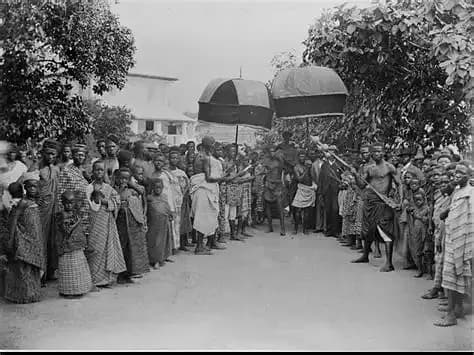
The Fante Confederation grew from the long history of coastal states cooperating to protect trade and political independence. In 1868, Fante leaders formed a confederation amid pressure from Asante power inland and growing British and Dutch intervention along the coast.
The transfer of Dutch forts to Britain, agreed by European powers without the consent of neighbouring African states, helped drive the alliance. Fante forces resisted Dutch authority at Komenda and sought to prevent changes that threatened established relationships and local sovereignty.
In 1871, chiefs and educated professionals reorganised the confederation at Mankessim and adopted a written constitution. It provided for an executive council, representative assembly, taxation, courts, a standing force, roads and schools. These institutions combined Fante political traditions with ideas drawn from nineteenth-century constitutional government.
The confederation was never a simple modern nation-state. Member states retained their own authorities, finances were limited, and leaders disagreed over strategy. British officials saw the organisation as a challenge to colonial influence, detained some of its leaders and obstructed its work.
By 1873 the confederation had collapsed under internal strain and external pressure. Britain proclaimed the Gold Coast Colony the following year. Even so, the confederation remains important as evidence of African constitutional innovation and coastal political agency before formal colonial rule.
Reflections
0