
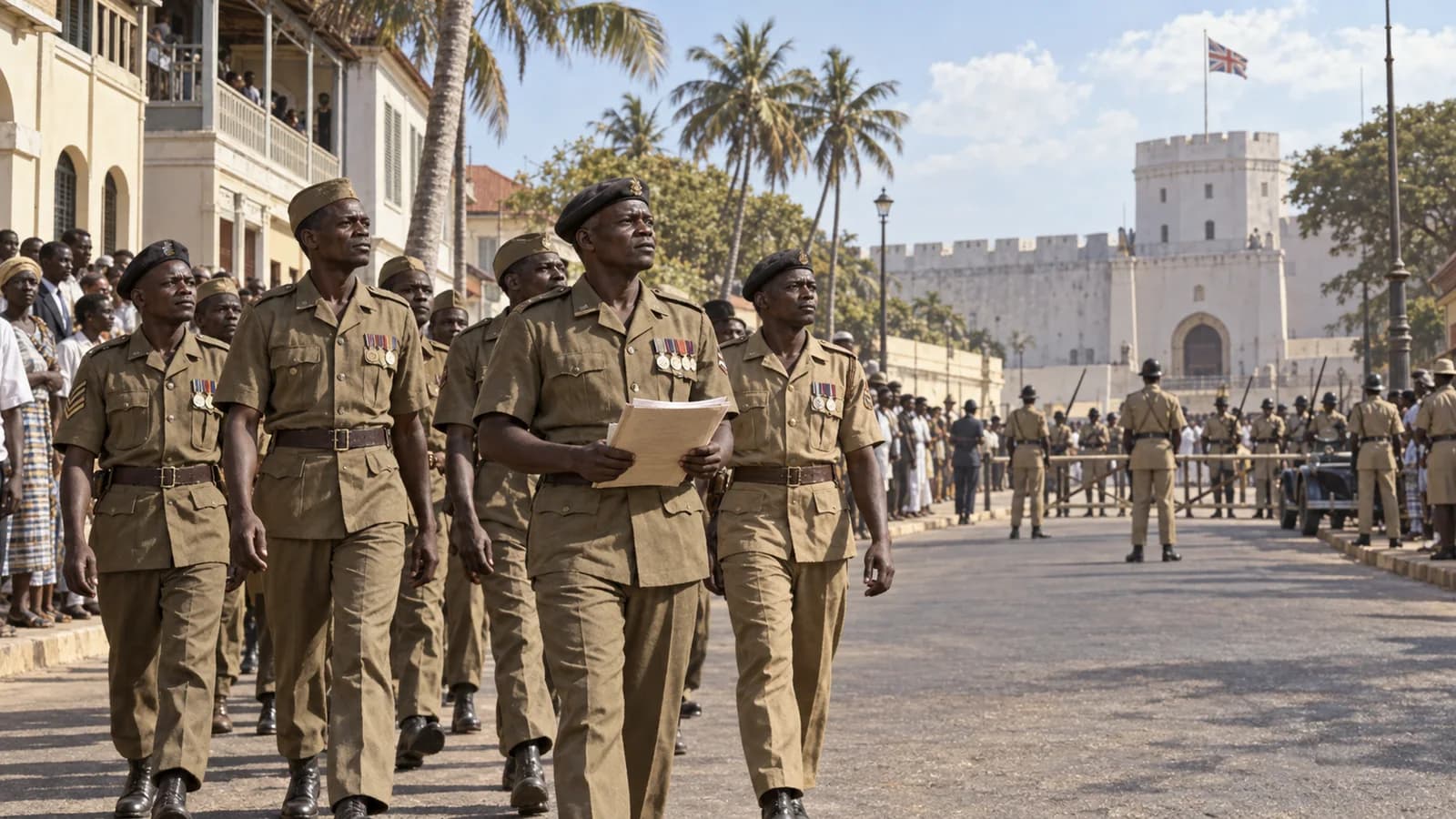
On 28 February 1948, unarmed Gold Coast veterans of the Second World War marched toward Christiansborg Castle in Accra. They intended to present a petition about unpaid benefits and the difficult conditions they faced after returning from military service.
Police stopped the marchers at the Christiansborg crossroads. When the veterans continued forward, Superintendent Colin Imray fired on them. Sergeant Cornelius Frederick Adjetey, Corporal Attipoe and Private Odartey Lamptey were killed, and others were wounded.
News of the shooting spread quickly through Accra, where anger was already high over prices, shortages and the power of foreign-owned trading firms. Looting and unrest began in the capital and spread to other towns. The events exposed a deep crisis in colonial rule rather than a single, spontaneous grievance.
The colonial government detained six leaders of the United Gold Coast Convention, including Kwame Nkrumah. The arrests increased their public standing. Britain appointed the Watson Commission to investigate; its report recognised widespread political and economic discontent and helped prompt constitutional reform.
The riots did not by themselves produce independence, but they transformed the pace and character of nationalist politics. Nkrumah left the UGCC and founded the Convention People's Party in 1949, building a mass campaign for immediate self-government. Ghana remembers the three veterans as people whose deaths became a turning point in the struggle.
Reflections
0