
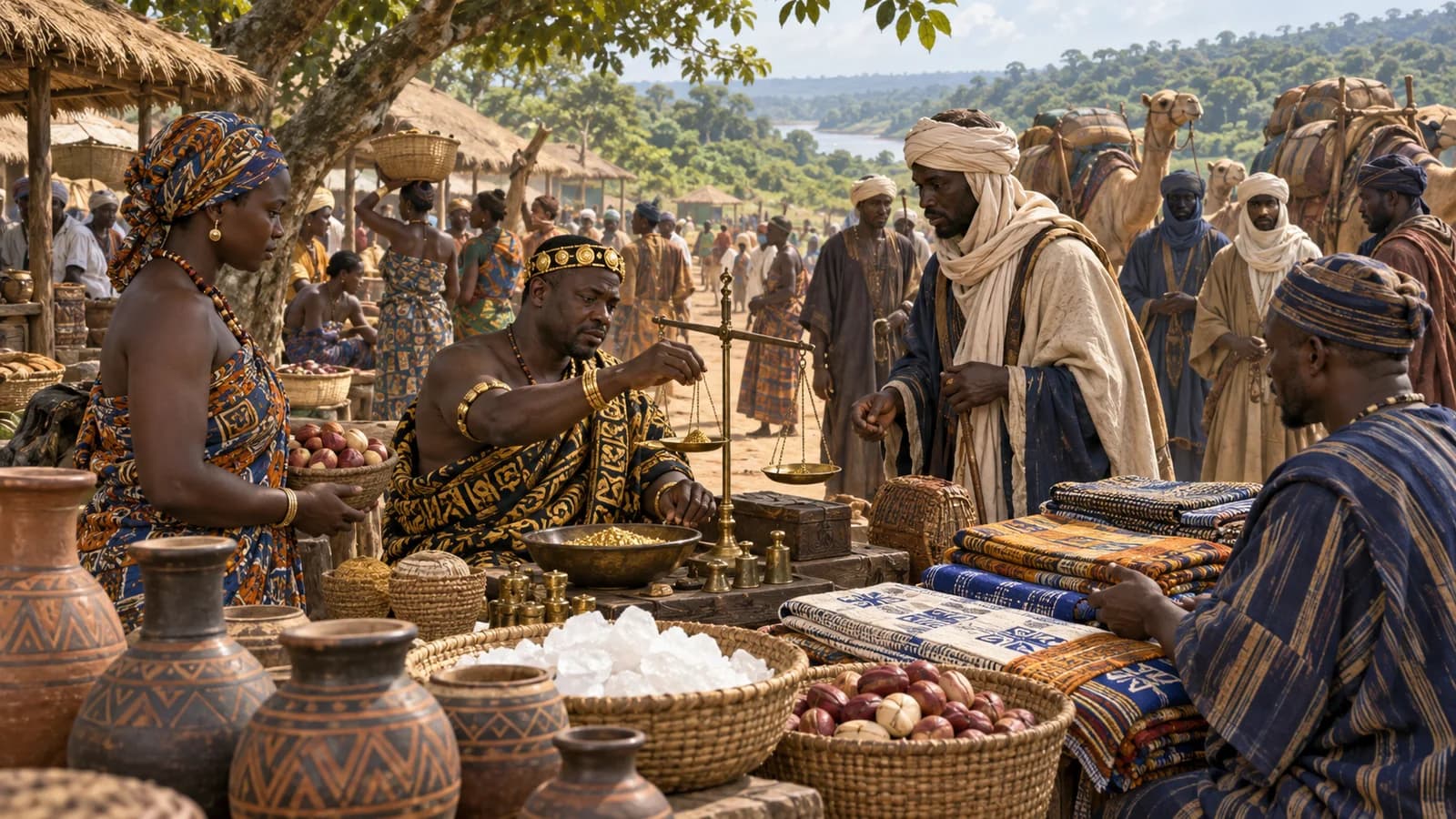
Long before European colonial rule, communities in the region now called Ghana traded through overlapping local and long-distance networks. Markets connected forest, savannah and coastal zones, moving food, pottery, cloth, metalwork and other everyday goods as well as high-value commodities.
Gold was especially important. Miners and traders in Akan-speaking areas supplied gold that moved north through intermediary markets toward the Sahel and trans-Saharan routes. In exchange came salt, cloth, copper goods and other products. These exchanges changed over centuries; there was no single route or kingdom controlling all commerce.
Kola nuts also travelled north from the forest zone, valued as stimulants and gifts. Muslim Wangara or Dyula merchants helped connect forest markets to commercial communities farther north, while Hausa traders later became prominent in major market towns. Islamic scholarship and commercial practice often travelled with these networks.
From the late fifteenth century, Portuguese and then other European merchants opened new Atlantic connections on the coast. African merchants and political authorities negotiated access to gold, ivory and other goods. Over time, the trade in enslaved people became a devastating part of these exchanges, linking commerce to warfare, captivity and forced migration.
Women were central to production and market exchange, although their roles varied across place and period. Surviving gold weights, scales and oral histories show the knowledge required to measure value, enforce agreements and maintain trust. Pre-colonial commerce was therefore not an isolated system but a changing set of African-led networks connected to wider worlds.
Reflections
0