
Ghana's democratic journey has not followed a straight line. Independence in 1957 was followed by the First Republic in 1960, but Kwame Nkrumah's government became a one-party state in 1964. A military and police coup removed him in February 1966. Civilian government returned under Prime Minister Kofi Abrefa Busia in 1969, only to be overthrown in 1972.
The 1970s and early 1980s brought successive military governments, economic distress and political violence. Flight Lieutenant Jerry John Rawlings first took power in June 1979, transferred authority to the elected government of Hilla Limann that September, and returned in a second coup on 31 December 1981. His Provisional National Defence Council governed until the transition to the Fourth Republic.
A referendum approved a new constitution in 1992. Rawlings won the presidential elections of 1992 and 1996 as the candidate of the National Democratic Congress. When his constitutional terms ended, the 2000 election produced the first transfer of power between parties in Ghana's history: John Agyekum Kufuor of the New Patriotic Party succeeded him in January 2001.
Further transfers followed. John Atta Mills of the NDC won in 2008; Nana Addo Dankwa Akufo-Addo of the NPP defeated incumbent John Dramani Mahama in 2016; and Mahama returned to office after winning the 2024 election. The 2012 and 2020 presidential results were challenged in court, demonstrating the role of legal institutions even as the judgments and electoral system remained subjects of debate.
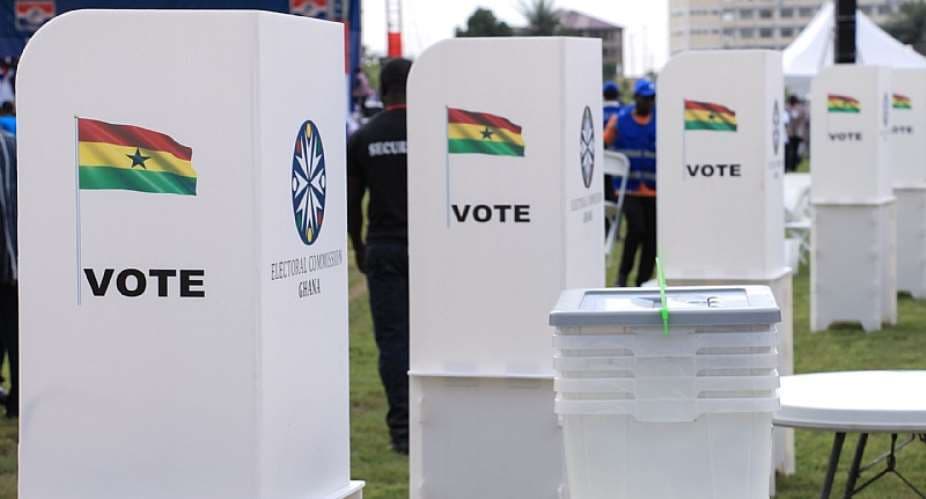
Ghana's Fourth Republic is supported by regular elections, an active press and civil society, and a constitutionally independent Electoral Commission. It also faces real pressures, including political polarisation, misinformation, unequal access to resources and episodes of electoral violence. Its democratic record is therefore best understood as a continuing civic achievement rather than a finished success story.
Reflections
0