
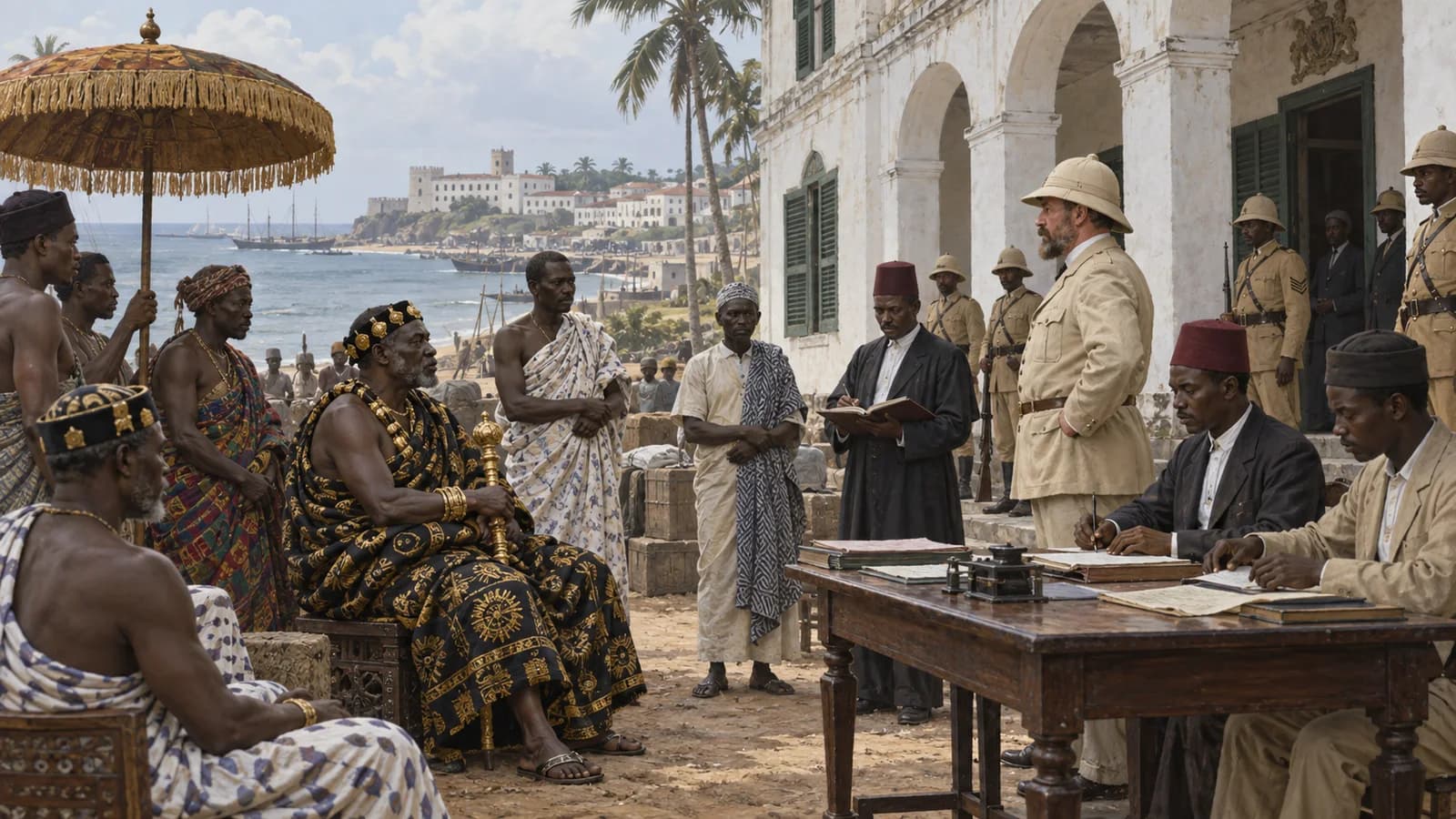
British rule in the Gold Coast was assembled gradually rather than imposed in a single event. British merchants operated coastal forts, and officials used treaties with local rulers to expand influence. In 1874 Britain declared a Crown Colony over parts of the coast after another war with Asante.
Colonial territory expanded through conquest and annexation. Asante was incorporated after campaigns in 1896 and 1900–01, while the Northern Territories became a British protectorate. These regions retained distinct administrative arrangements, and chiefly authority was reshaped through indirect rule.
The colonial economy centred increasingly on exports. African farmers made cocoa the colony's leading crop, while gold mining, timber and transport infrastructure grew. Roads and railways primarily linked producing areas to ports. The wealth generated was unevenly distributed, and colonial policy limited African control over major decisions.
Mission schools and government institutions created new opportunities for literacy and professional work, but access was unequal. Educated Africans, merchants, farmers, workers and traditional authorities all contested colonial policies. Their responses ranged from petitions and legal action to strikes, boycotts and armed resistance.
Political organisations including the Aborigines' Rights Protection Society, the National Congress of British West Africa, the United Gold Coast Convention and the Convention People's Party built on one another's work. Independence in 1957 emerged from these long struggles as well as post-war mass mobilisation and constitutional negotiation.
Reflections
0