
Government and society
Why did Ghana go from 10 to 16 regions?
In December 2018, voters in six areas approved new regions in referendums. Oti, Bono East, Ahafo, Western North, North East and Savannah were created from four older regions.
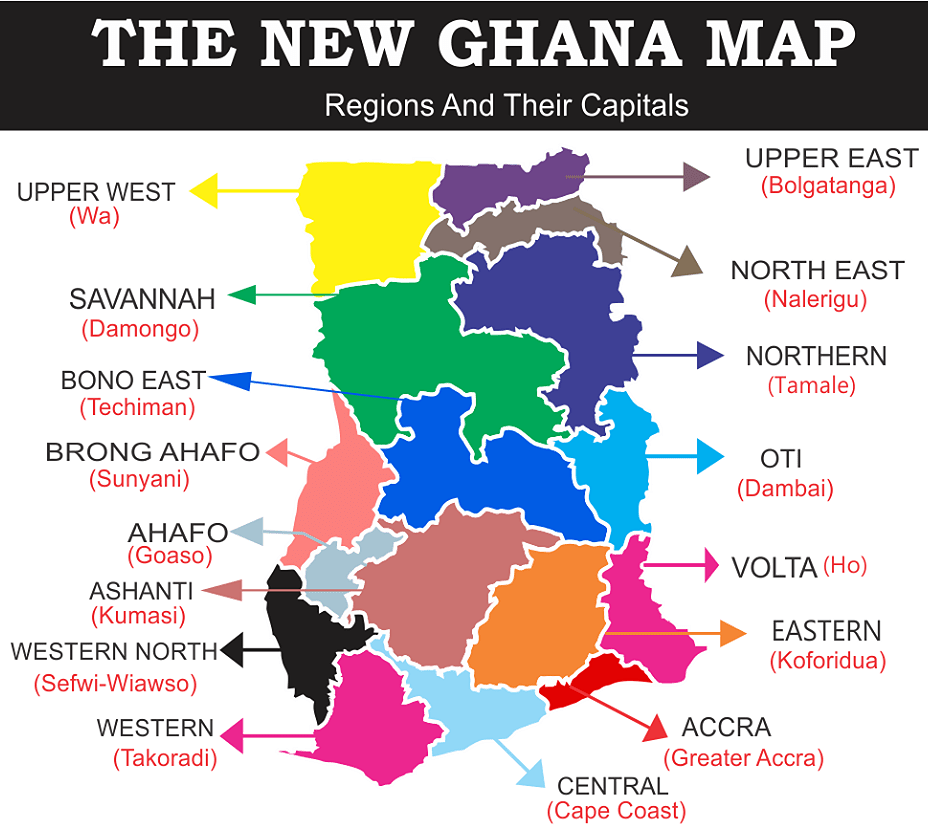
For decades Ghana had ten regions. Today it has sixteen. The change came from a series of referendums at the end of 2018.
Where the new regions came from
Four of the old regions were divided:
Northern Region: North East (capital Nalerigu) and Savannah (capital Damongo) were created from it. Tamale remains the capital of Northern. Brong Ahafo Region: Bono East (capital Techiman) and Ahafo (capital Goaso) were created, and the remaining area became the Bono Region, with Sunyani as its capital. Volta Region: Oti (capital Dambai) was created from its northern part. Ho remains the capital of Volta. Western Region: Western North (capital Sefwi Wiawso) was created. Sekondi remains the capital of Western.
How the vote worked
Only people living in the areas affected voted. For a new region to be approved, at least half of registered voters had to take part, and at least 80 percent of valid votes had to be yes.
The results
The Electoral Commission, led by its chairperson Jean Adukwei Mensa, announced the results on 28 December 2018. All six proposals passed easily. Yes votes ranged from 98.64 percent in Oti to 99.68 percent in Ahafo. Turnout ranged from 77.69 percent in Western North to 90.41 percent in Ahafo.
Why people wanted new regions
Supporters argued that some regions were very large, and that a closer regional capital would bring government services and development nearer to the people who live there. The new regions were set up in 2019, and new regional capitals and offices followed.
Sources and further reading
- Graphic Online: Confirmed results of the 2018 referendum on new regions
- Graphic Online: New Ghana map with 16 regional capitals (February 2019)
Facts can change. If you spot something that needs updating, send us a correction.