
Government and society
What role do chiefs play under Ghana’s Constitution?
Ghana’s Constitution guarantees the institution of chieftaincy and creates a National House of Chiefs, but it bars chiefs from active party politics.
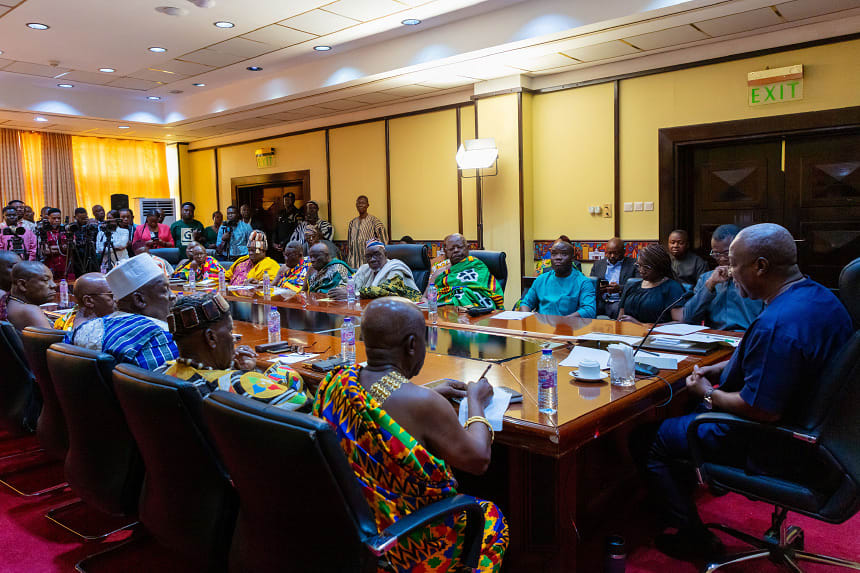
Chiefs and queen mothers are a visible part of life in Ghana, leading festivals, settling disputes and speaking for their communities. Their place is protected in the 1992 Constitution.
Chieftaincy is guaranteed
Article 270 guarantees the institution of chieftaincy, together with its traditional councils, as established by customary law and usage. Parliament may not pass a law that gives any person or authority power to recognise or withdraw recognition from a chief, or that takes away from the honour and dignity of the institution.
Who counts as a chief
Article 277 defines a chief as a person who comes from the right family and lineage, has been validly nominated, elected or selected, and has been enstooled, enskinned or installed under customary law. The definition includes queen mothers.
The Houses of Chiefs
Article 271 creates a National House of Chiefs. Each Regional House of Chiefs elects five paramount chiefs to sit on it. Chieftaincy disputes are handled through these traditional bodies and the courts.
Out of party politics
Article 276 says a chief shall not take part in active party politics. A chief who wants to stand for Parliament must first give up his stool or skin. Chiefs may still hold public office for which they are qualified.
Stool and skin
In southern Ghana, a chief is “enstooled”, because the stool is the symbol of the office. In much of northern Ghana, a chief is “enskinned”, because the symbol is an animal skin.
Sources and further reading
- Constitute Project: Ghana’s Constitution of 1992 (Articles 270 to 277)
- Judicial Service of Ghana: Chieftaincy
Facts can change. If you spot something that needs updating, send us a correction.