
Fufu is one of Ghana’s most recognised meals, but the smooth mound in the bowl carries many stories: crops grown in different landscapes, the rhythm of mortar and pestle, family preferences and soups built with patience. This guide introduces Ghanaian fufu while respecting the variations that make it a living food tradition.
1. What Ghanaian fufu is
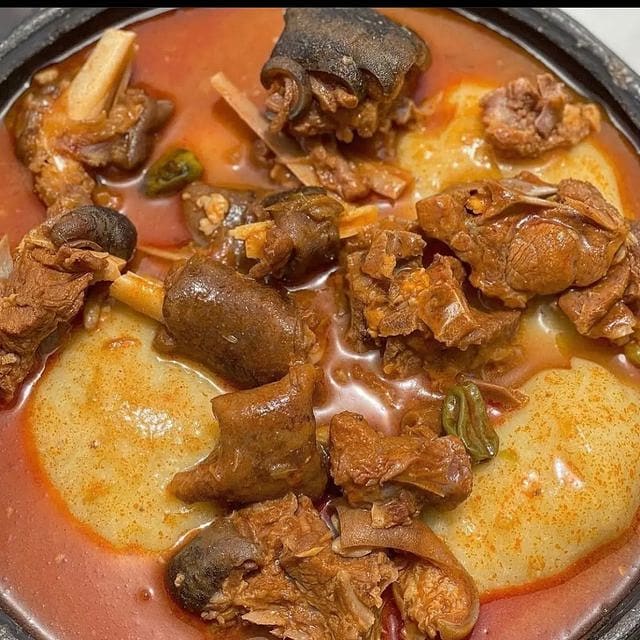
Fufu, or fufuo, is a smooth, elastic Ghanaian staple served in a bowl of soup. Cooked starchy crops are pounded and worked together until no lumps remain and the mixture can be shaped into a soft mound. Its mild flavour is deliberate: fufu carries the aroma, pepper and richness of the soup around it.
Fufu belongs to a wider family of pounded and dough-like foods across West and Central Africa, but Ghanaian combinations and serving traditions have their own histories. Within Ghana, the ingredients and proportions change by region, season and household.
Buying and eating it
A serving may look small but is filling. Begin with a comfortable portion and leave room for the soup and protein.
2. Cassava, plantain, cocoyam and yam
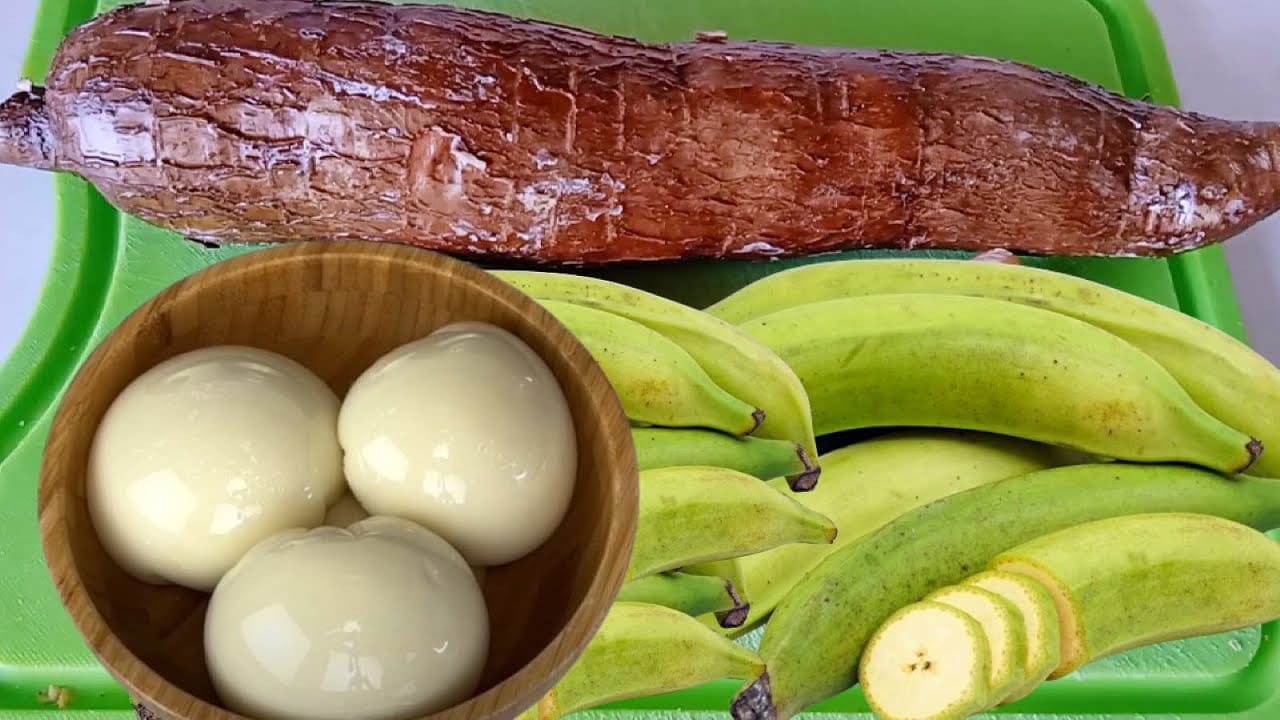
Cassava mixed with green plantain is one of Ghana’s familiar fufu combinations. Cassava supplies stretch and body, while plantain adds aroma, colour and a gentle savoury character. In other kitchens, cassava may be combined with cocoyam, and some communities prepare yam fufu. The result can therefore range from pale cream to warmer yellow or grey tones.
These differences are meaningful rather than mistakes. Crops available in forest, transition and farming communities shaped local preferences, and experienced cooks adjust the mixture to achieve the texture their household enjoys.
Buying and eating it
Cassava must be properly peeled and thoroughly cooked before pounding. Never eat raw cassava or improvise its preparation without reliable guidance.
3. The rhythm and skill of pounding

Traditional fufu is made with a large wooden mortar and a long pestle. One person pounds while another sits close to the mortar, turns the mixture, adds cooked pieces and moistens it when needed. Their timing must be exact. The person turning the fufu watches every stroke and moves their hand only in the safe space between them.
Pounding changes separate pieces of cassava, plantain, cocoyam or yam into one cohesive, lump-free mass. It is physical work, practical knowledge and coordinated rhythm. Machines now prepare fufu in many homes and businesses, but hand pounding remains culturally recognisable and valued for its texture.
Buying and eating it
Do not attempt the two-person pounding method without an experienced teacher. The heavy pestle can cause serious injury when the rhythm is missed.
4. Light, groundnut and palm nut soups
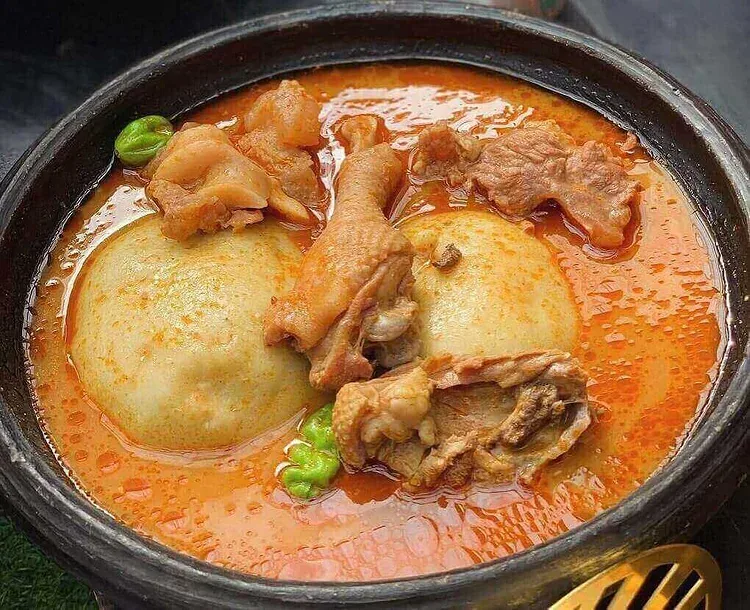
Fufu is eaten with soup, and the soup determines much of the meal’s personality. Peppery light soup is bright and aromatic. Groundnut soup, also called nkate nkwan, is creamy and deeply savoury. Palm nut soup brings the rich colour and flavour of cooked palm fruit. Other soups and local variations appear across Ghana.
Goat, chicken, beef, fish, snails, mushrooms or other ingredients may be added according to the recipe and occasion. A good bowl gives enough soup to accompany every portion of fufu, with the protein and vegetables arranged so they remain part of the shared experience.
Buying and eating it
Ask about the meat, fish, shellfish, groundnuts and seasoning before ordering. Groundnut soup contains peanuts, and stock may contain ingredients that are not immediately visible.
5. How fufu is served and eaten
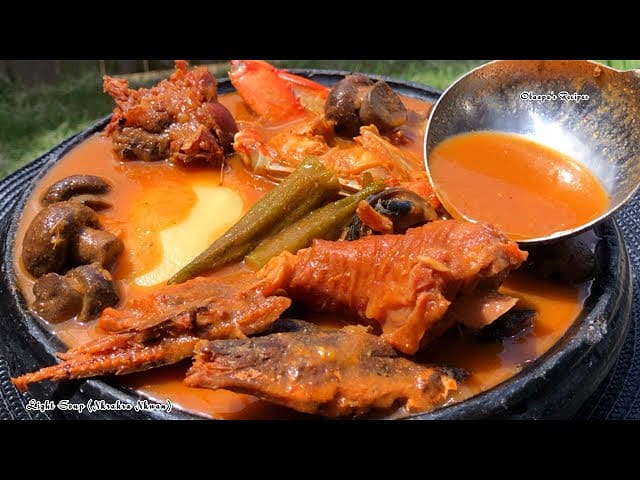
Fufu arrives as a smooth mound resting in hot soup. Many people eat it with the clean fingers of the right hand: pinch off a small piece, shape a slight hollow with the thumb, gather some soup and swallow it comfortably. Chewing is not forbidden, despite a popular explanation sometimes given to visitors; what matters is taking a safe, manageable portion.
At home, fufu can turn lunch into a social occasion. At a chop bar, diners choose a soup and preferred protein. The meal rewards an unhurried pace because the soup is hot, the portion is substantial and conversation is part of the pleasure.
Buying and eating it
Wash your hands before eating, take small portions and allow very hot soup to cool. A spoon is also perfectly reasonable when it is more comfortable or accessible.
6. Fufu, hospitality and living heritage
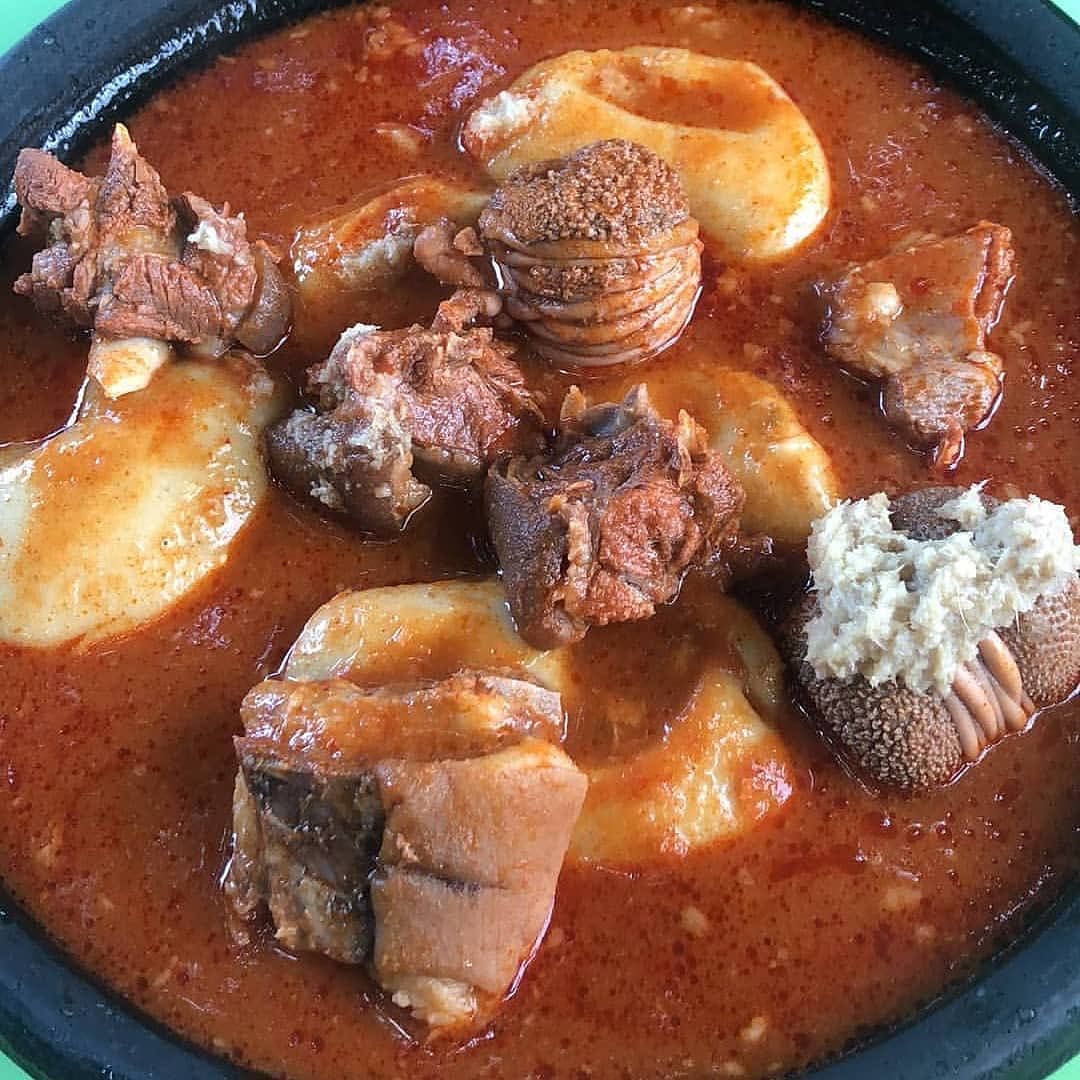
Fufu is present in ordinary family meals, weekend gatherings, chop bars and important moments of hospitality. The sound of pounding can announce that food is being prepared, while the choice of soup and protein can reflect season, place, celebration and the guest being welcomed.
Its continued popularity also shows how food heritage adapts. Prepared flour and pounding machines answer the demands of urban life and diaspora kitchens, while many cooks retain the flavours and textures learned at home. Neither convenience nor tradition is one single experience; Ghanaian families decide what works for them.
Buying and eating it
When photographing pounding or a family meal, ask permission first. Credit the cook and community when sharing their method or story.
One name, many local expressions
Fufu should not be reduced to one fixed ingredient ratio or one national bowl. When documenting it, record the crops used, the soup’s local name, the community, the cook and the occasion. Those details preserve the knowledge that a broad label cannot hold on its own.
Community classroom
Join the conversation
Share a reflection, ask a question, or add what you know.
Sign in to save progress and join the discussion.
No reflections yet. Start the conversation.
Reflections
0