
Ampesi is proof that a memorable meal does not need to be complicated. Ghanaian cooks pair carefully boiled yam, plantain, cocoyam or cassava with stews that carry the colour, pepper and character of the kitchen. This guide explores the meal while recognising that ingredients and names vary across homes and communities.
1. What ampesi is

Ampesi is a Ghanaian way of serving boiled starchy foods with a flavourful stew, sauce or soup. Yam and plantain are especially familiar, while cocoyam and cassava also appear. One plate may use a single staple or bring two together, giving the diner a contrast in colour, sweetness and texture.
The food is direct and comforting. Instead of pounding the staple as for fufu, the pieces remain whole after boiling. That simplicity puts attention on the quality of the produce and the stew beside it. Ampesi can be an everyday home meal, a filling lunch or a welcoming plate for a guest.
Buying and eating it
“Ampesi” describes the boiled staple and style of meal, so the exact combination on the plate changes between homes, seasons and regions.
2. Yam, plantain, cocoyam and cassava
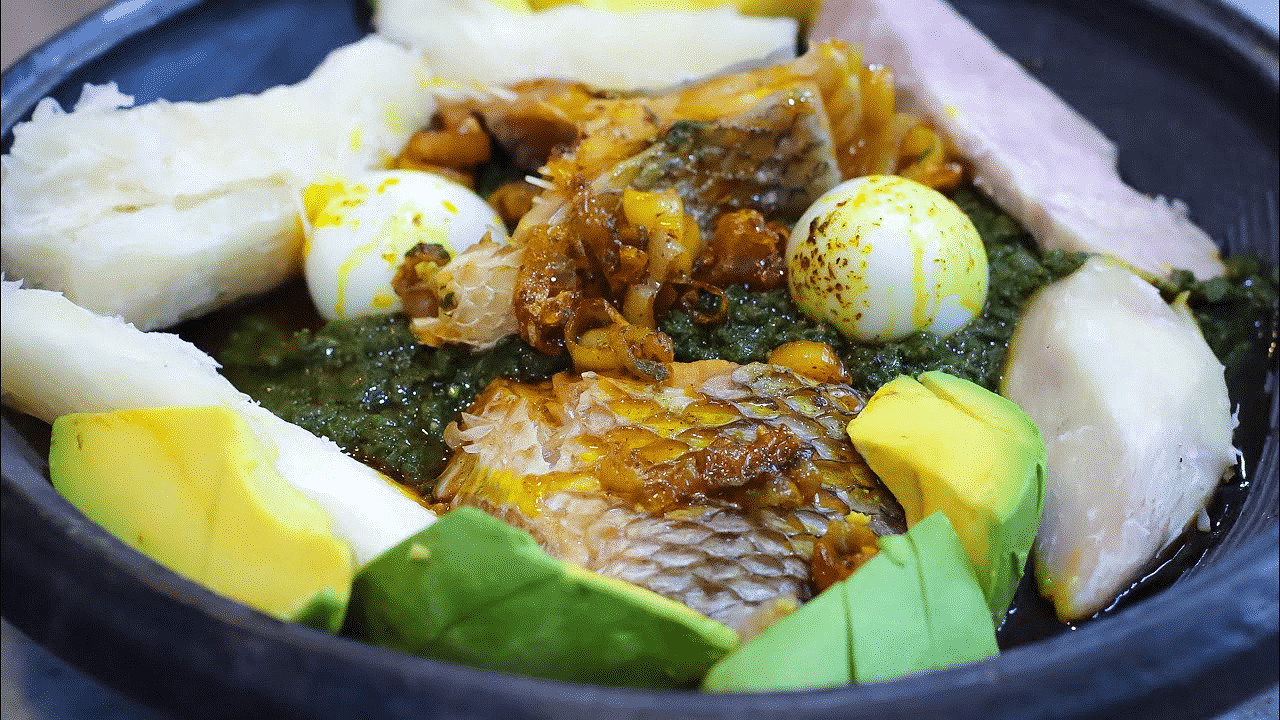
Each ampesi staple brings something different. Yam is firm, pale and satisfying. Green plantain is dense and savoury, while plantain allowed to ripen becomes softer and sweeter. Cocoyam has a smooth, earthy character, and cassava offers a clean, substantial bite when properly prepared.
The peeled pieces are boiled in water until tender but still able to hold their shape. Cooks judge doneness by feel: a fork or knife should enter without the piece collapsing. A mixed plate is often timed carefully because yam, plantain, cocoyam and cassava do not always soften at the same speed.
Buying and eating it
Cassava must be properly peeled and fully cooked. Never eat raw cassava, and follow experienced preparation guidance when cooking it at home.
3. Kontomire stew: a favourite partner
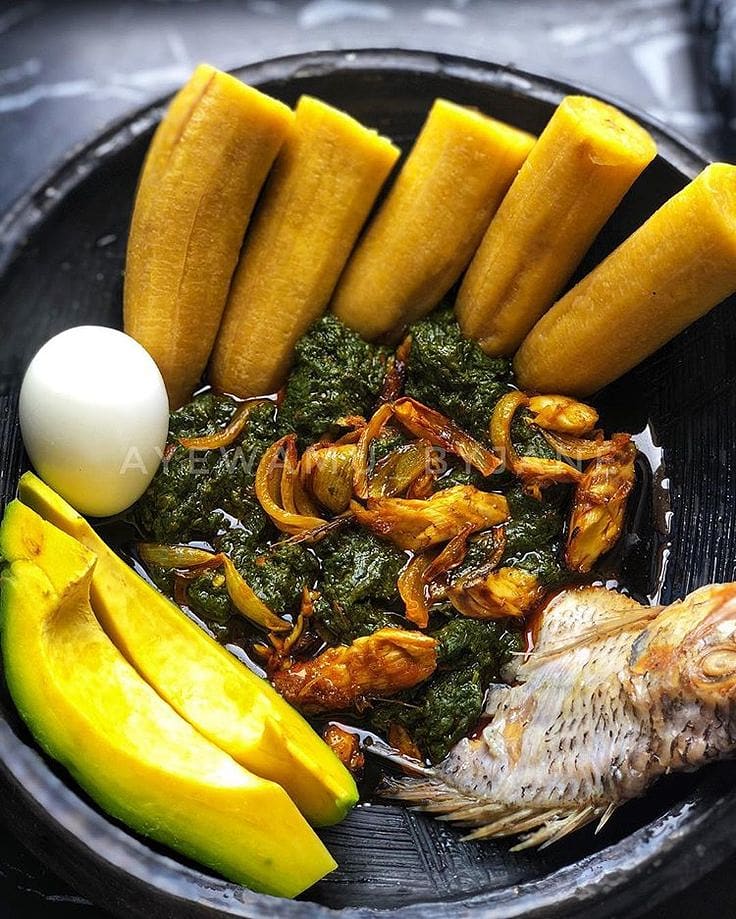
Kontomire stew is one of ampesi’s best-known companions. Cocoyam leaves are cooked with onion, tomato, pepper and seasonings until the stew becomes rich and green. Ground melon seed, commonly called agushie, may thicken the stew and add a gentle nuttiness. Fish, meat, eggs or mushrooms can complete the dish.
The pairing works because the plain boiled staple carries the stew so well. A piece of yam or plantain absorbs the savoury sauce, while the leaves, pepper and protein make every mouthful feel complete. Recipes remain personal: colour, texture and heat vary from one kitchen to another.
Buying and eating it
Kontomire stew may contain fish, shellfish, egg or ground seeds. Ask about the ingredients if you have allergies or follow a vegetarian or vegan diet.
4. Garden egg, abom and palava sauce
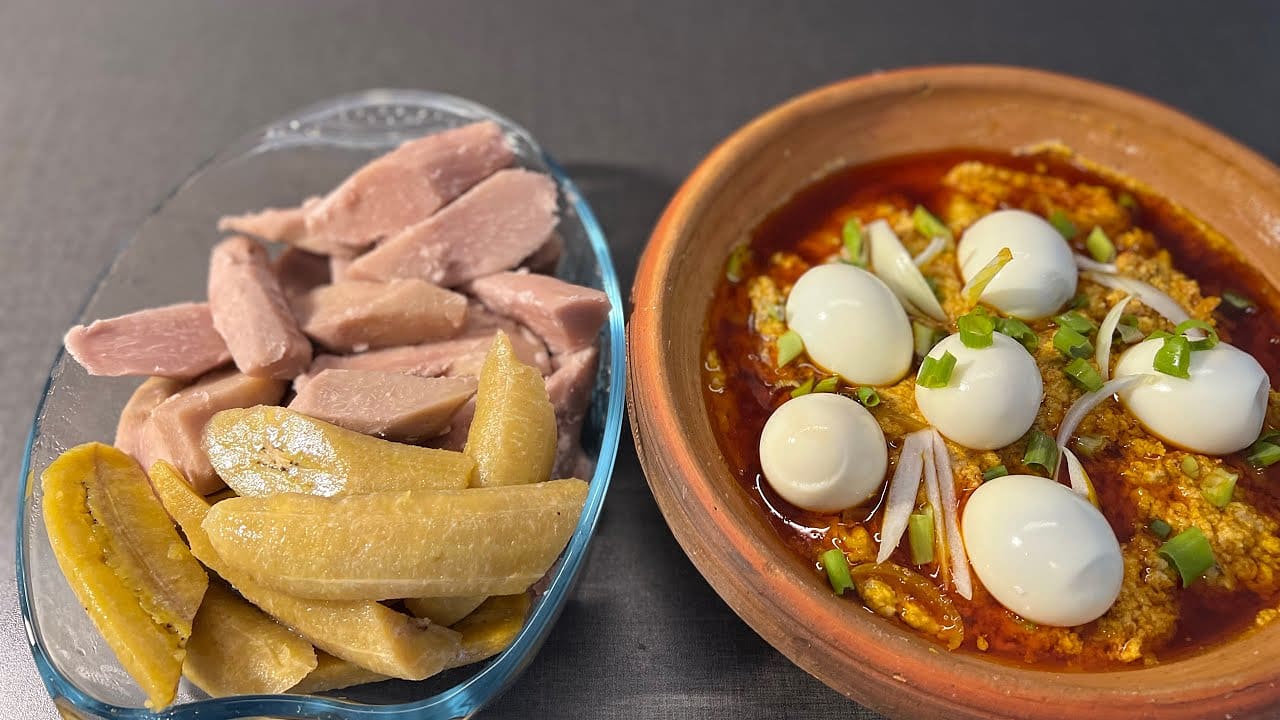
Ampesi is equally at home beside garden egg stew, abom or palava sauce. Garden egg stew has a softly bitter, savoury flavour enriched with tomato, onion and often fish. Abom brings cooked vegetables or garden eggs together with pepper, onion and palm oil. Palava sauce builds a fuller stew around green leaves and may include agushie and protein.
These accompaniments show why ampesi is better understood as a flexible meal than a single fixed recipe. The same boiled yam can taste entirely different beside a smoky fish stew, a peppery vegetable sauce or a rich green-leaf preparation.
Buying and eating it
Palm oil can stain clothing, and the pepper level may be high. Taste a little of the stew first and ask what protein has been added.
5. Serving and enjoying ampesi
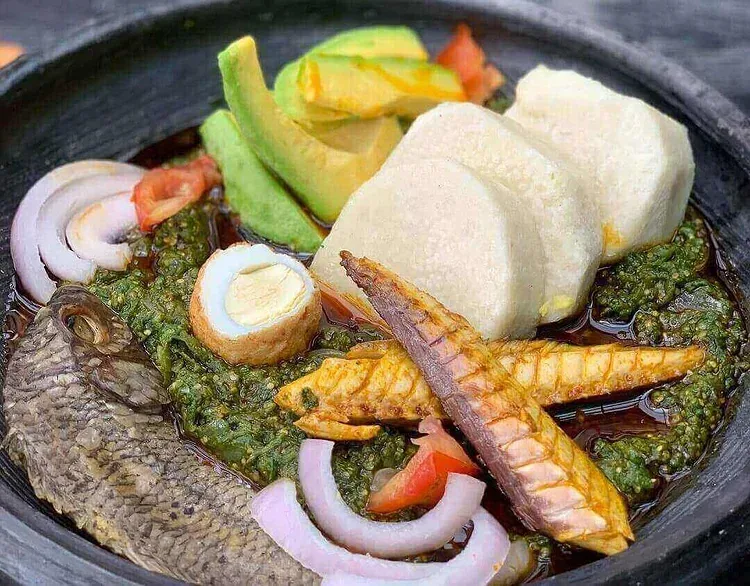
Ampesi is usually served hot, with the stew placed beside or partly over the boiled pieces. Egg, fish, meat, avocado or extra vegetables may be added according to the household and the season. The diner breaks off a manageable piece of the staple and gathers enough stew to flavour it.
A satisfying plate balances the portion of starch with vegetables and a source of protein. For visitors, ampesi is a useful introduction to Ghanaian home cooking because its parts are easy to recognise while the combinations reveal regional produce, family preferences and the cook’s own touch.
Buying and eating it
Eat freshly cooked ampesi hot. Cool leftovers promptly, refrigerate them, and reheat thoroughly rather than leaving cooked staples and stew at room temperature for long periods.
A meal shaped by place and season
Ampesi reflects what farms, markets and gardens provide. A plate may change with the yam harvest, the ripeness of plantain, the leaves available for stew or the fish sold that morning. When recording or sharing a recipe, name the cook and community where possible and allow local knowledge to be more specific than a single national description.
Community classroom
Join the conversation
Share a reflection, ask a question, or add what you know.
Sign in to save progress and join the discussion.
No reflections yet. Start the conversation.
Reflections
0