
Enter the celebration
Odwira is a time for a community to clear away the old year and begin again. It is especially associated with the Akuapem Traditional Area, where Akropong becomes the focus of days of remembrance, purification, thanksgiving and public celebration.
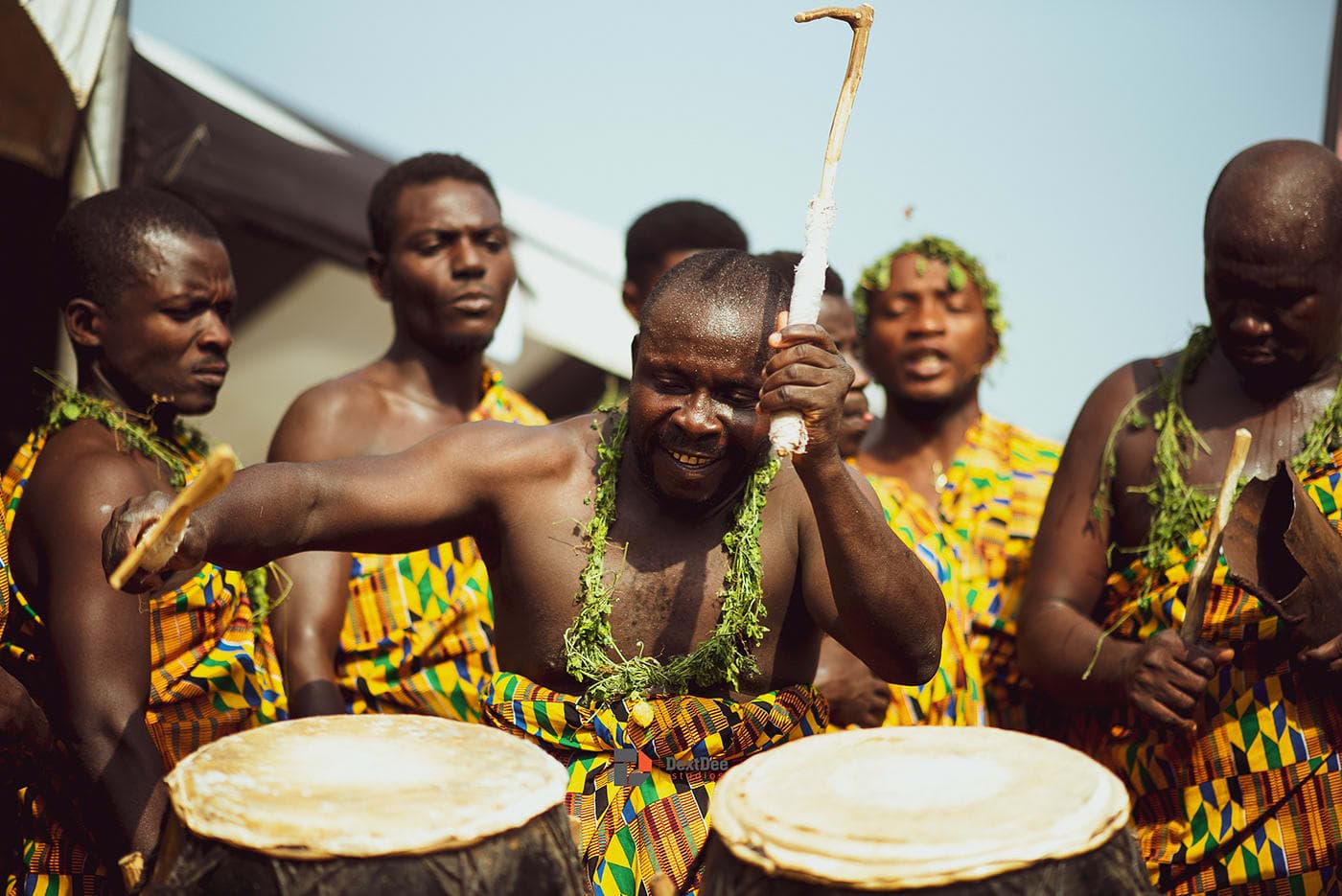
The festival moves between solemn and joyful moments. Traditional authorities honour ancestors and carry out rites connected with the wellbeing of the state. Later, processions, drumming, dancing and a grand durbar bring residents and returning family members into the celebration.
Not every part of Odwira is a public performance. Some ceremonies belong to stool houses, priests and traditional leaders. Visitors should use the published programme, ask before photographing rites and understand that the festival’s quieter moments matter as much as the durbar.
Cleansing and accountability
Purification at Odwira concerns more than physical cleanliness. The festival asks a community to consider relationships, leadership and the troubles of the previous year before moving forward. Remembrance of ancestors places today’s decisions within a longer chain of responsibility. This is why periods of restriction and solemn ritual come before the most colourful public events.
Homecoming in Akuapem
Odwira also changes the rhythm of Akropong. Family members return, old school groups reunite and local organisations use the season to support development projects. Food vendors, musicians and visitors add to the town’s energy, but the traditional calendar still sets the pace. The festival makes room for both continuity and change: inherited rites remain central while concerts, talks and community programmes speak to younger generations.
Reflections
0