
Enter the celebration
Homowo is often translated as “hooting at hunger.” For Ga communities in and around Accra, the name recalls a time of severe food shortage and the relief that followed when the rains returned and the harvest succeeded. The festival turns that memory into a season of gratitude, reunion and confidence in the future.
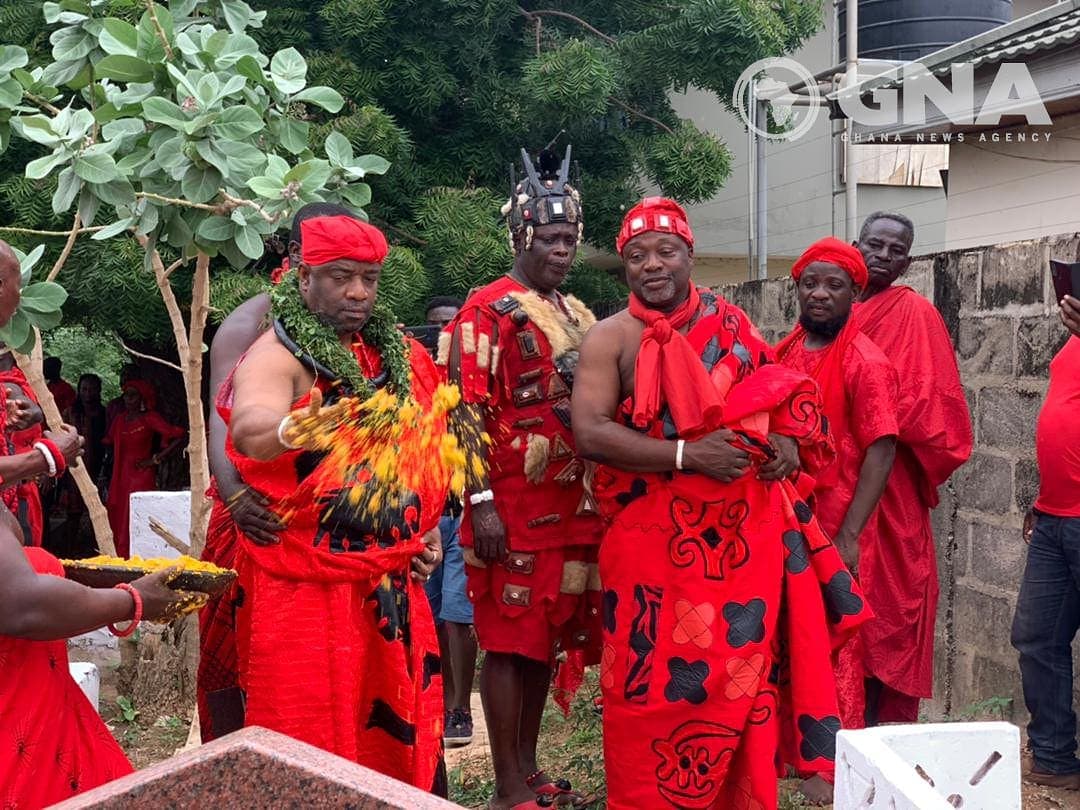
Kpokpoi, a steamed cornmeal dish usually eaten with palm-nut soup, sits at the centre of the celebration. Traditional leaders sprinkle it in family houses and through neighbourhoods, sharing food symbolically with ancestors before families gather around their own meals. Each Ga town follows its own calendar, so Homowo unfolds across Accra rather than on one citywide day.
The weeks before the festival include a traditional ban on drumming and noise. When the quiet period ends, the change in atmosphere is unmistakable: drums return, processions fill the streets and relatives come home. Visitors are welcome at many public events, but the most meaningful moments still belong to families and local communities.
A season, not a single day
People sometimes speak of Homowo as though all of Accra celebrates together. In practice, Ga communities including Ga Mashie, La, Osu, Teshie, Nungua and Tema observe related traditions on their own dates. That staggered calendar reflects the history and authority of each town. It also means a visitor may encounter several distinct Homowo celebrations during one season.
Listen for the story in the food
Kpokpoi is more than a festival meal. Its preparation, sharing and ceremonial sprinkling turn the memory of hunger into a public statement that the community endured. When a household welcomes relatives to eat, the celebration becomes intimate: old disagreements may be discussed, younger relatives meet elders, and belonging is renewed around the table. The loudest procession may attract the camera, but this quieter work of family reunion is what gives Homowo its lasting strength.
Reflections
0