
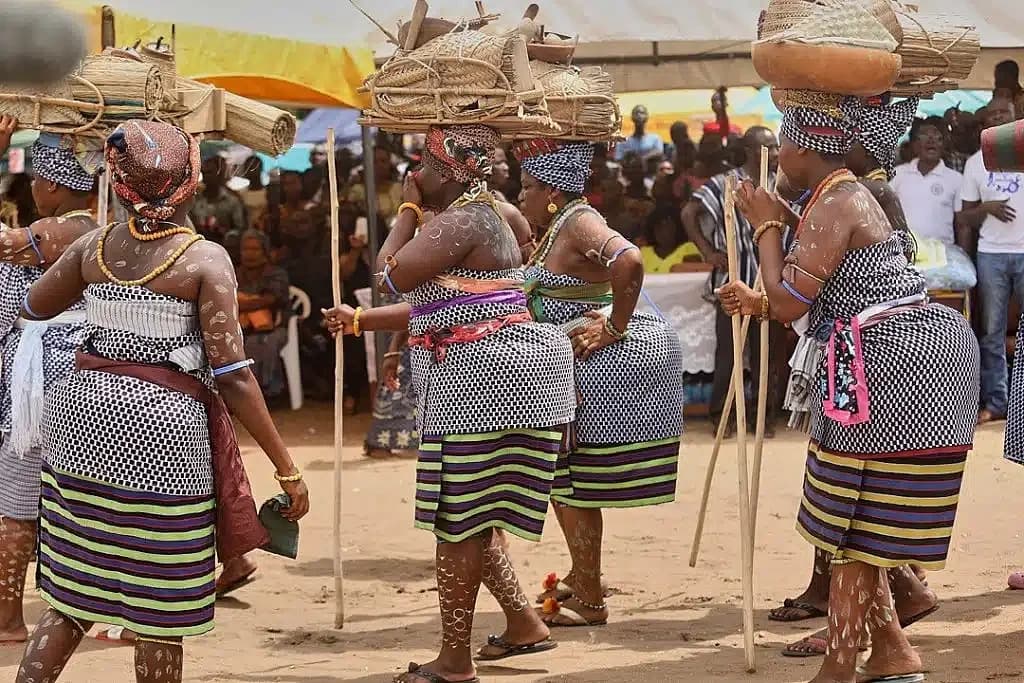
Enter the celebration
Hogbetsotso brings Anlo-Ewe people home to Anloga to remember a defining migration story. Oral tradition tells how their ancestors escaped harsh rule at Notsie, in present-day Togo, and travelled south to establish new communities around the Keta Lagoon.
The festival name is commonly understood as marking the exodus from Notsie. Stories of the escape—including the careful weakening of the town wall—are retold alongside messages about unity, leadership and the responsibilities of the present generation.
At the public durbar, chiefs, dance groups and families gather around the Awoamefia of Anlo. Ewe drums and songs give the day its energy, while homecoming meetings and community projects connect the remembered journey to life in Anlo today.
A history carried by many voices
The migration from Notsie survives through oral accounts, songs, names and family histories rather than one single written version. Details can differ between narrators, and those differences are part of a living tradition. What remains constant is the memory of people acting together to escape oppression and build a new home.
Why the durbar matters
The durbar is a public meeting point for the Anlo state, not simply a parade. Chiefs arrive with their communities, the Awoamefia receives guests, and speeches connect inherited values with current concerns. Development, education and unity often sit beside performances on the programme. For Anlo people living elsewhere, returning to Anloga makes identity tangible through language, rhythm, kinship and place.
Reflections
0