
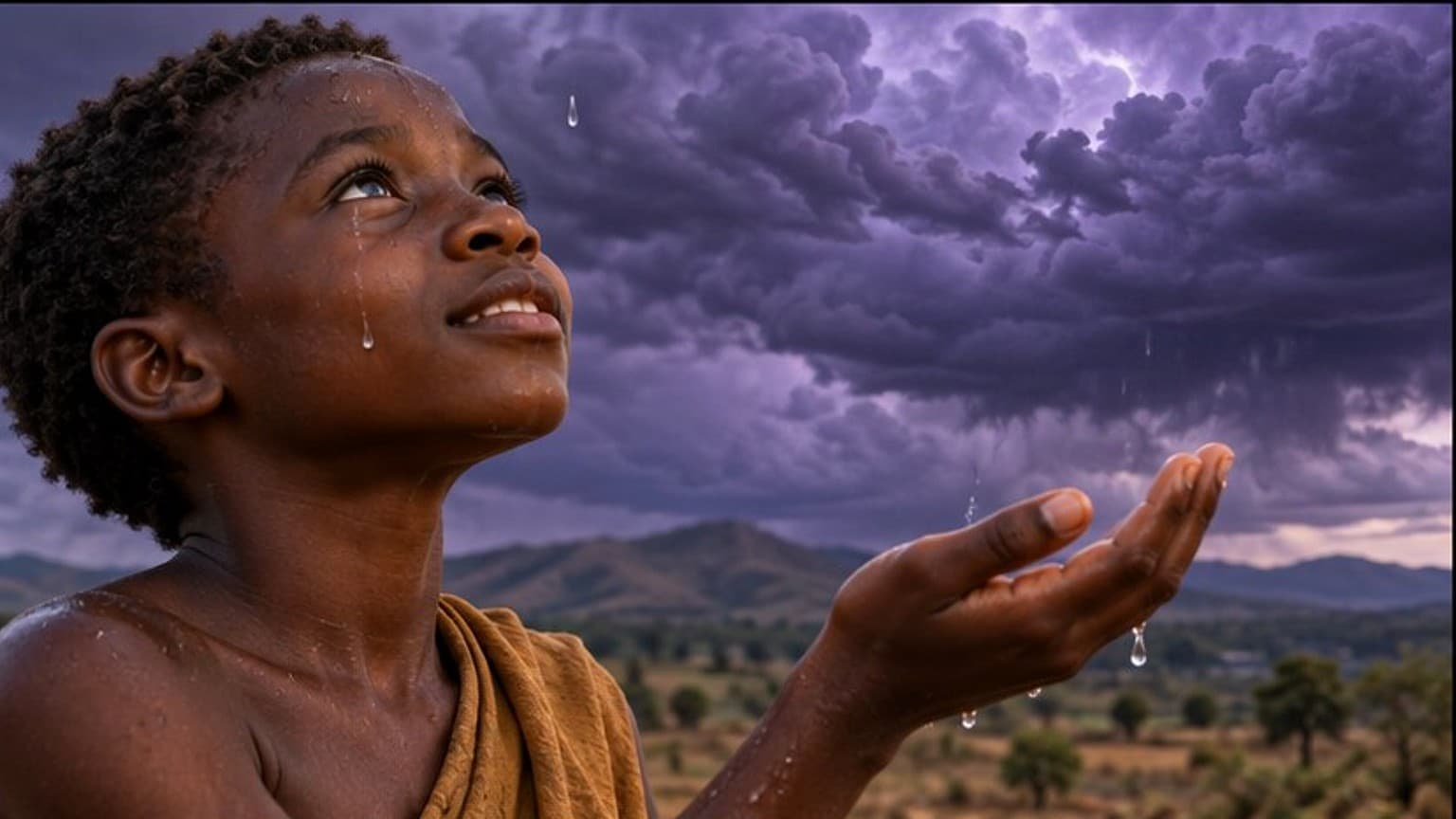
Three years of drought had passed over the land. The wells gave dust. The rivers were gone except for the memory of where they had been. The old people said they had never seen anything like it. The priests performed every ceremony they knew. The chiefs sent offerings to every shrine in the region. The elders prayed.
Nothing came.
A young shepherd boy named Kwame Mensah sat every evening on the hill above his village watching the empty sky. He had no sheep anymore, they had all been sold or died. He had no family chores to do because there was nothing left to tend. So he sat on the hill and sang.
He sang the songs his grandmother had taught him, the working songs, the farming songs, the rain songs she said her own grandmother had sung when the fields were green. He did not sing them to call rain. He sang them because they were beautiful, and because in a season of dying things, beauty felt like an act of defiance.
He sang for weeks. The villagers heard him and at first were annoyed, what good was singing? But the songs were so full of longing, of love for the land, of the simple unwillingness to give up, that eventually people would stop what they were doing and listen. Old women would hum along from their doorways. Children would come and sit near him on the hill, not making noise, just listening.
One evening, when the sunset was the particular shade of orange that dust in the air makes beautiful, Kwame sang a song that his grandmother had only sung once, a very old rain song, in words so old that even she had not been sure of the meaning. He sang it all the way through, making up the words he could not remember, filling the gaps with the feeling of what he knew the song was asking for.
Then he sat in the silence that followed.
The first drop hit his hand. He thought he had imagined it.
The second hit his cheek. He looked up.
The sky had changed, the dust-orange had given way to a deep, bruised purple, and clouds were building from the east, enormous and dark and heavy with the water that had been withheld for so long.
By the time he ran down the hill to the village, the rain was falling in wide, warm sheets, and the village had come alive in a way that three dry years had taken from it. People were standing in their compounds with their arms open, faces upturned, laughing and weeping together.
They asked Kwame later whether he had known the song would work. He said: "I didn't know it would. I just knew I had to keep singing."
The elders discussed for many years whether it was the song that called the rain, or whether the rain had simply come on its own time and the boy had been lucky. Most settled on this: perhaps both were true. Perhaps the rain had been ready to come, and the boy's singing, so patient, so without demand, so full of love for the land, had simply opened a door that was waiting to be opened.
Either way, Kwame Mensah became a man known throughout his region not as a warrior, a chief, or a wealthy merchant, but as the boy who sang when there was nothing else to do, and did not stop.
What lesson travelled with this tale?
Finish the story, reflect on its choices, then reveal the wisdom it carries.
Reflections
0